Thinking about buying your next Arizona rental property, but not sure which market actually fits your goals?
The answer may depend less on which city sounds most appealing and more on whether you are underwriting for cash flow today or appreciation over time.
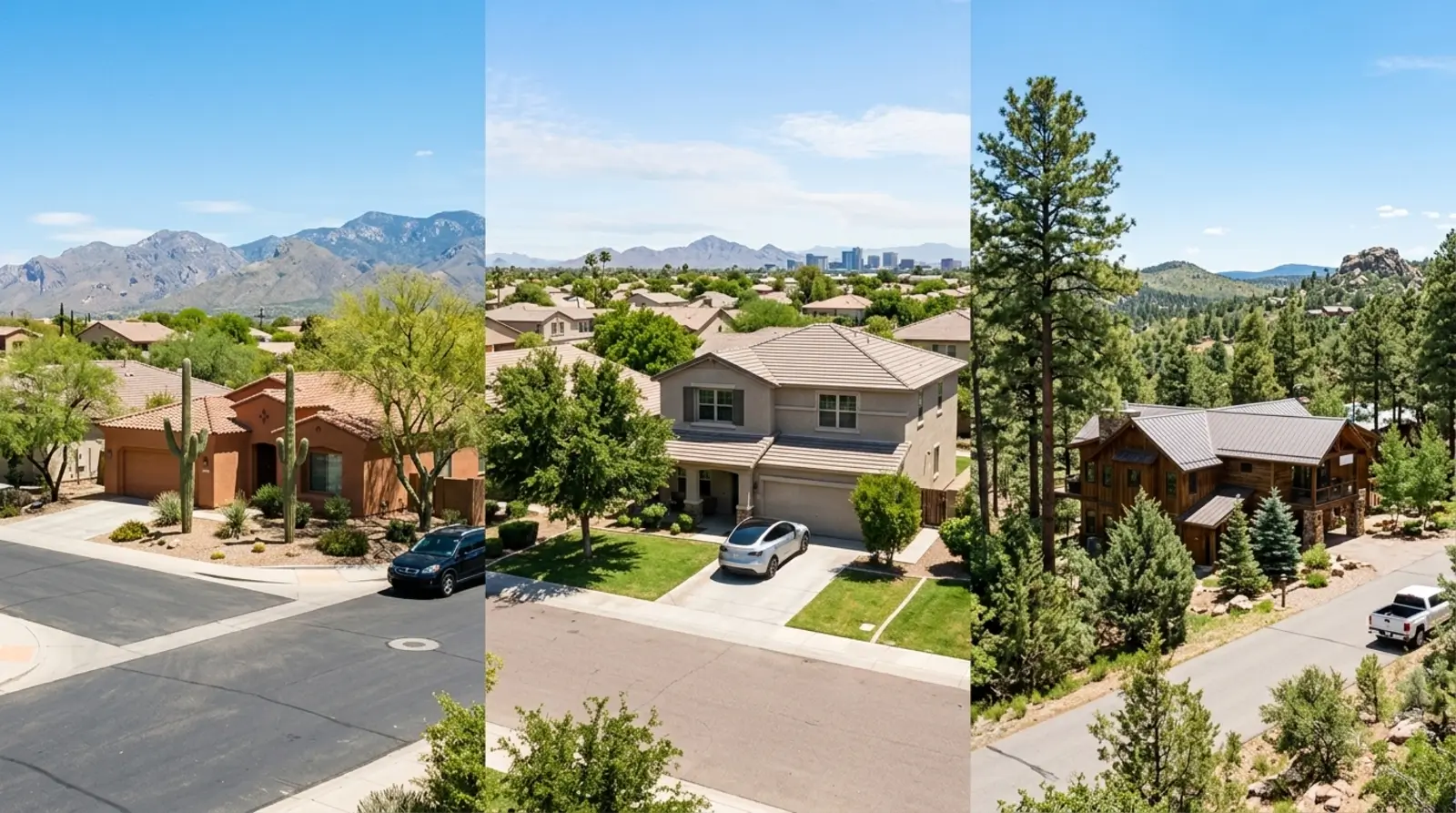
Phoenix, Tucson, and Prescott are not interchangeable markets. Each one currently shows a different relationship between purchase price, achievable rent and long-term growth potential.
As a property management company serving investors across the Phoenix and Tucson areas, Rosenbaum Realty Group works with owners weighing exactly this kind of decision. Understanding how these markets compare can help you evaluate where your capital may work hardest.
Key Takeaways
- Phoenix offers scale and liquidity, but home values have moderated and yields have compressed in several submarkets.
- Tucson's lower entry prices relative to rent may support stronger straightforward cash flow than Phoenix in many cases.
- Prescott commands a lifestyle and appreciation premium that can result in thinner rental yields than Tucson or parts of Phoenix.
- Prescott Valley may offer a more moderate entry point than Prescott proper while retaining similar access to the area.
- The right market depends on your specific investment goals, timeline and risk tolerance, not a single citywide statistic.
What Cash Flow and Appreciation Actually Mean Here
Cash flow generally refers to the income a rental property produces relative to what it costs, evaluated today. Appreciation refers to the property's value growth over time, which may or may not translate into cash in your pocket unless you sell or refinance.
A market can favor one of these without favoring the other. Understanding which one matters more for your specific goals is the first step before comparing any city's numbers.
Phoenix: Scale and Liquidity, With Compressed Yields
Phoenix remains Arizona's largest and most liquid market. Zillow's Home Value Index put the average Phoenix home value at approximately $410,169 in early 2026, down about 2.7% year over year as the metro continues normalizing from pandemic-era highs.
That price moderation has not necessarily translated into stronger cash flow across the board. Rent growth in several Phoenix submarkets has also softened, which can compress yield even as prices come down. Submarket selection appears to matter substantially in Phoenix specifically, a topic worth its own dedicated analysis.
Phoenix's tax environment may still work in an investor's favor regardless of submarket. Arizona's flat 2.5% state income tax and comparatively low property tax rates can improve after-tax returns compared to many other states.
Tucson: Where the Cash Flow Math May Work Harder
Tucson's pricing sits meaningfully below Phoenix. Redfin reported a median sale price of approximately $319,788 for the three months ending August 2026, while Zillow reported an average asking rent of $1,495 as of September 8, 2026.
A lower purchase price against a comparable rent can produce more favorable cash flow math on paper, though the appropriate figures for any individual property should always be verified directly rather than assumed from citywide averages.
Tucson's demand base may also be somewhat less cyclical than tourism-driven markets, supported in part by University of Arizona employment and continued healthcare sector expansion in the area.
Prescott and Prescott Valley: A Different Kind of Thesis
Prescott represents a different investment case entirely. Zillow's Home Value Index showed an average Prescott home value of approximately $597,307 as of August 31, 2026, down slightly year over year, while median rent has historically run in the $1,600 to $2,200 range depending on the specific data source and property type.
That combination of a comparatively high purchase price against moderate rent may produce a thinner rental yield than either Phoenix or Tucson in many cases. Prescott's appeal for many buyers appears to be centered on lifestyle, climate and long-term appreciation potential rather than immediate cash flow.
Prescott Valley, nearby, may offer a somewhat different entry point. Redfin reported a median sale price of approximately $452,000 for the three months ending June 2026, a discount to Prescott proper while retaining reasonable proximity to similar amenities.
A Hypothetical Comparison
Consider three hypothetical purchases, one in each market, each generating $1,800 in monthly rent.
- Phoenix: A property purchased near $410,000 generating $1,800 monthly rent could reflect a gross yield in the area of 5.3%, before expenses, vacancy or financing costs.
- Tucson: A property purchased near $320,000 generating the same $1,800 monthly rent could reflect a gross yield in the area of 6.75%, before the same deductions.
- Prescott: A property purchased near $597,000 generating the same $1,800 monthly rent could reflect a gross yield in the area of 3.6%, before the same deductions.
The comparison illustrates a broader pattern rather than a promise about any specific property: markets with lower entry prices relative to rent may show stronger gross yield potential, while markets commanding a price premium may be rewarding buyers through appreciation rather than current income.
Which Market May Fit Your Strategy?
If cash flow is your primary objective, Tucson's current pricing may offer more favorable math than Phoenix or Prescott, though property-specific analysis remains essential.
If you are prioritizing liquidity, scale and the ability to exit relatively quickly if your plans change, Phoenix's larger market may be worth the trade-off in yield, provided you evaluate submarkets individually rather than relying on a citywide average.
If you are investing primarily for long-term appreciation and lifestyle demand, Prescott's thesis may be the intentional choice rather than an oversight, even with a thinner current yield.
Frequently Asked Questions
- Tucson's pricing relative to rent may currently support stronger cash flow math than Phoenix or Prescott in many cases, though this can vary significantly by property and should be verified individually.
- Not necessarily. Prescott's investment case appears to center on appreciation and lifestyle demand rather than immediate rental income, which may suit a different investor objective than a cash-flow-focused strategy.
- Prescott Valley has shown a somewhat lower median sale price than Prescott proper in recent data, which may provide a more moderate entry point while retaining access to similar regional amenities.
- Phoenix appears to be normalizing from pandemic-era price growth, with the metro's average home value reportedly declining slightly year over year in early 2026 according to Zillow data.
- Not necessarily. Yield is one factor, but liquidity, tenant demand stability, your investment timeline and your overall goals should also factor into the decision alongside any single yield figure.
Talk to Rosenbaum Realty Group About Your Next Investment
Comparing these markets on paper is a starting point, not a final answer. The right fit depends on your specific goals, timeline and the property you are actually considering.
Not sure which Arizona market fits your goals?
Rosenbaum Realty Group manages rental properties for investors across Phoenix and Tucson, which gives our team a practical view of how these markets are actually performing for owners day to day. If you are weighing where to invest next, request information about our Phoenix property management services, or learn more about our Tucson property management services and owner resources.
Request Information About Our Phoenix Property Management Services